
The Earth’s rocky outerlayer (the lithosphere) is broken up into around seventeen major pieces that we call tectonic plates. These plates form a jigsaw pattern around the planet with their edges interacting to cause earthquakes, volcanoes, mountain ranges and deep ocean trenches. But what makes up these jigsaw pieces?

Plates
The tectonic plates are made up of two types of crust – continental crust and oceanic crust with a small section of the underlying mantle. This solid material is called the lithosphere. We classify plates into three groups depending on their size – Major, Minor, and Micro plates.
Major Plates
These are plates that are greater than 20 million square kilometers.
- Pacific Plate – 103,300,000 km2
- North American Plate – 75,900,000 km2
- Eurasian Plate – 67,800,000 km2
- African Plate – 61,300,000 km2
- Antarctic Plate – 60,900,000 km2
- Indo-Australian Plate – 58,900,000 km2
- South American Plate – 43,600,000 km2
By the way, lots of maps divide the Indo-Australian plate into two separate plates…but I have not seen any evidence that they are separate. One day we will have evidence for one way or the other…but for now, the evidence does not show them being two plates.
Minor Plates
These are plates that are less than20 million square kilometers but greater than one million square kilometers.
- Somali Plate – 16,700,000 km2
- Nazca Plate – 15,600,000 km2
- Philippine Sea Plate – 5,500,000 km2
- Arabian Plate – 5,000,000 km2
- Caribbean Plate – 3,300,000 km2
- Cocos Plate – 2,900,000 km2
- Caroline Plate – 1,700,000 km2
- Scotia Plate – 1,600,000 km2
- Burma Plate – 1,100,000 km2
- New Hebrides Plate – 1,100,000 km2
Micro Plates
These are plates that are less than one million square kilometers in size. Currently, around 56 have been identified, but this changes as new information is discussed by scientists studying the Earth’s plates.
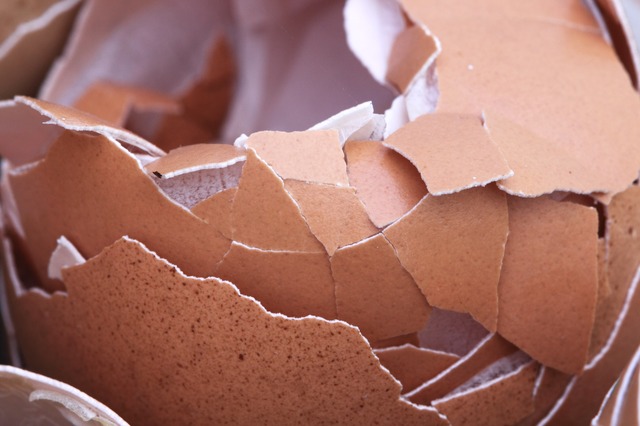
Imagine a hard-boiled egg with the shell cracked before you peel it. You will find large pieces, smaller pieces and in some places lots of tiny pieces. That is what the Earth’s crustal plates are like.
One major misconception is that a plate can only have ONE type of crust. For example, a plate made up of just continental crust. But this is not the case. Most plates are made up of a combination of crustal types with oceanic crust welded onto continental crust. So the boundaries between the types of crust are NOT necessarily the boundaries between plates.
Also, you must remember that sea level does not govern where continental crust ends. Continental crust can extend way out under the ocean.
One important difference between these two types of crust is their “buoyancy” dues to the density of the rocks. Because continental crust is made up of rocks of all types, including those rich in quartz, they are relatively less dense than the oceanic crust which is made up of silica-poor (ie no free quartz) basalt. Because of the ‘buoyancy of continental crust, it has survived many of the changes on the surface of our planet, and so here you find the very oldest rocks of the crust.
So now we have the jigsaw pieces. Next, we need to think about how those pieces interact with each other. But that’s another story….
For more of our blogs on Plate Tectonics see these posts:

Writing Prompts

Microfossils
Shale – and how we use it.
Sandstone – quartz, arkose and lithic

Apparent Polar Wandering & Plate Tectonics
Seismic Shadow
Seeing Inside the Earth

Tectonic Plates – Lithosphere, Moho, Asthenosphere
Plate Tectonics Battleships
Earth’s Plate Tectonic Features – ld
World Earthquakes by Depth – LD

Divergent Dilemma
What is the history of the theory of Plate Tectonics?

What are the mechanisms that drive Plate Tectonics?

Seeing inside the Earth

Earth’s Interior Layers

Earth’s layers explained

Plate Tectonics Google Map
Benioff Zones – earthquake evidence for subduction
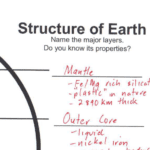
Structure of Earth

Volcano shapes – shield, composite/stratiform, caldera – and chemistry
Transform fault plate boundaries – what are their features?
Convergent plate boundaries – subduction, collision and Island arcs – what are their features?
Divergent plate boundaries – what are their features?
The Evidence for Plate Tectonics
Earth’s Magnetic Reversals, Polar Wandering and Plate Tectonics

Earthquakes – what you need to know!
Introduction to Plate Tectonics

Lava in Lihue – Role play activity
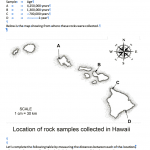
Rocks of Ages

Evidence for Plate Tectonics

Boundaries – how the plates interact

Plates – understanding the tectonic jigsaw pieces.

The Earth’s Crust – a simple way to view it.